Enterprise Welding Adds Robotic Press Brake Automation to the Shop Floor
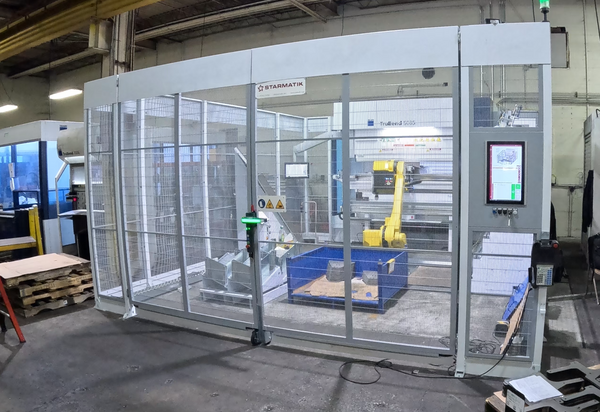
There’s a new addition on the shop floor at Enterprise Welding – a robotic press brake system centered on the TRUMPF TruBend 5085. The system is now up and running, expanding our bending capacity and helping us keep pace with the type of work customers are asking for more often.
This investment wasn’t about chasing automation for its own sake. It was designed to support higher volumes, tighter tolerances and more consistent turnaround times, especially for repeat production jobs.
Why we added a robotic press brake
Over the past several years, we’ve seen a steady shift in customer needs. Part volumes are increasing. Designs are getting more complex. And expectations around lead times and consistency are tighter than ever.
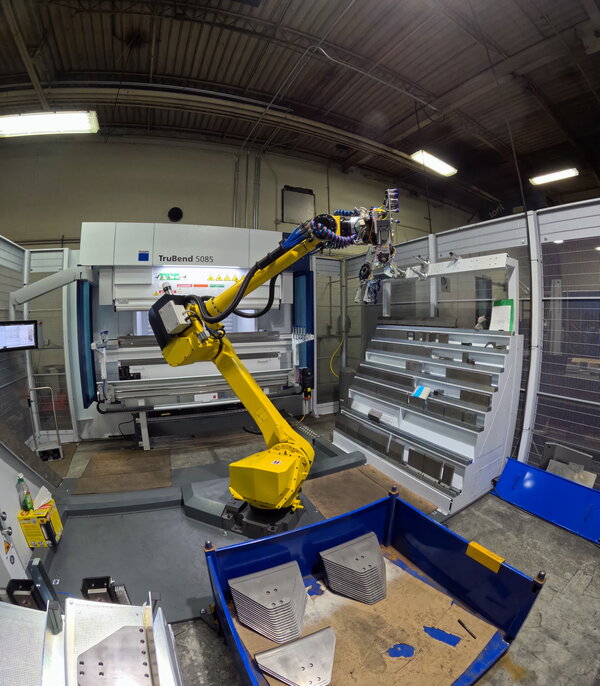
Manual press brake work still plays an important role in our operation, but certain jobs are better suited to automation. Long runs, repetitive bends and parts that require the same level of accuracy shift after shift are a natural fit for a robotic bending cell.
For jobs where repeatability matters most, automation removes variables that can creep in during manual handling. Michael Amos, Engineering Supervisor, states that automated bending cells help eliminate uncertainty in the process.
“Technical solutions like automated bendcells take out the guesswork,” Amos explains. “They’re always the preferred method at Enterprise Welding and Fabricating.”
Adding this system gives us more flexibility in how we schedule work and helps ensure we can meet customer demand without sacrificing quality.
What the system does
The new setup pairs a TruBend 5085 press brake with a robotic handling system designed specifically for bending applications. The robot loads parts, positions them accurately and handles the movement between bends, while the press brake performs each operation with the same programmed precision every time.
Instead of relying on manual handling for repetitive jobs, the system takes care of the repetitive, consistency-driven work. That allows our team to focus on setup, programming, oversight and the jobs that truly require hands-on experience.
Consistency you can see in the parts
One of the biggest benefits of robotic bending is repeatability. Once a job is dialed in, every part follows the same process – no variation from fatigue, shift changes or minor handling differences.
That means fewer mid-run checks, fewer adjustments and fewer surprises. Parts come off the brake ready for the next step, whether that’s welding, assembly or shipment. For customers, it translates to cleaner bends, tighter tolerances and results that match the print from the first piece to the last.
Helping keep jobs moving
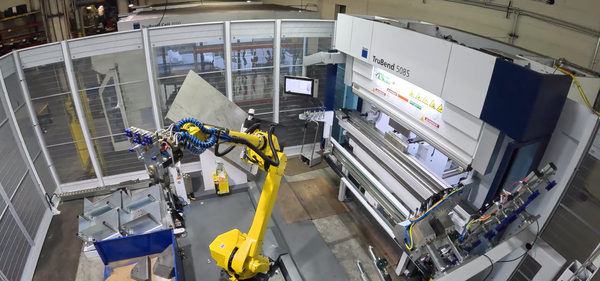
Speed isn’t the headline here; reliability is. Jobs moving during busy weeks and reduces the risk of bottlenecks on longer production runs. When a job is scheduled on the robotic cell, it runs as planned without waiting on availability or rework.
That consistency makes it easier for our customers to plan their own production schedules, knowing their parts will be ready when expected.
Still driven by skilled people
While the system is automated, it’s still very much guided by experience. Skilled operators program the bends, monitor performance and fine-tune setups to ensure everything runs correctly.
Automation doesn’t replace craftsmanship; it supports it. The technology allows our team to apply their knowledge where it matters most while letting the system handle the repetitive work it’s designed for.
What this means for customers
From a customer standpoint, the benefits are straightforward:
- More predictable delivery schedules
- Consistent bends across repeat orders
- Better support for higher-volume production work
Whether a job runs once or becomes a recurring order, the system helps us deliver the same level of quality every time.
Continuing to invest the right way
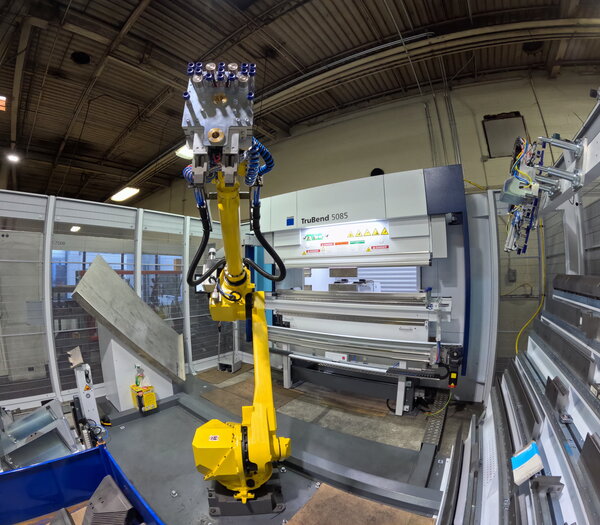
The addition of the TruBend 5085 robotic press brake is another step in Enterprise Welding’s ongoing investment in equipment that makes sense for our customers and our work. Phil Carlon, Director of Operations, says the success of Enterprise Welding’s first two automated cells helped drive the decision.
“We took what we learned from our first two automated cells and made another investment due to their success,” Carlon explains. He adds, “This cell will allow for larger parts to be automated, giving Enterprise even more flexibility.”
As demands evolve, we’ll continue adding the right tools, not just to replace experience, but to support it and ensure we’re equipped to deliver reliable, high-quality fabrication for years to come.